It is Finished.

The PhD rewires you… now I’m rewiring back. The last lesson of the PhD isn’t in the thesis. It’s learning how to stop mistaking endurance for balance.

It is finished. Two months ago today, exactly three years from when I first stumbled into this PhD life, as the clock struck midnight, I had fully drafted my thesis and booked my viva for two months later. Last night, I hit submit.

The only thing left on my PhD agenda now is to lie down like a salted fish and do nothing. (Yes, a nod to Chow’s immortal line: 「做人如果冇夢想,同條鹹魚有乜嘢分別呀?」— “If a person has no dreams, what’s the difference from a salted fish?”). Well, my dream at this point is to nap, so I guess I’ve come full circle.

Amazing art piece we bought in Lisbon – Fish drawn on broken tiles

PhD changes you (arguably – without consent…)

Doing a PhD is a huge undertaking. You think you’re just signing up for a degree, a structured thing with deadlines and milestones. But somewhere along the way it slips under your skin and rewires you. You start to realise it’s not just about producing a thesis — it’s about quietly reshaping how you think, how you spend your time, how you relate to others.

There are the obvious things: long hours, early mornings that bleed into late nights, bending time around deadlines like you’re running your own private Olympics. Dreams about work — not the metaphorical kind, but actual dreams where datasets, arguments, and half-written paragraphs chase you around.

I did try to protect myself. Weekends were sacred — my one immovable boundary. But the weekdays? They became a kind of over-compensation marathon. “If I keep weekends safe, I should pay it back by working even harder midweek.” And so I did. For the last year especially, that rhythm hardened: fewer dinners with friends, more nights staring at a half-eaten meal with my laptop still open, declining church commitments, community projects quietly pushed aside.

And yet, people who know me would probably describe me as a bit of an octopus — always dipping my tentacles into multiple things at once. Even during the PhD, that was my counter-measure: to resist being swallowed whole by the project, or by the endless temptation to improve methodologies on an upward-to-infinity scale. It was my way of clinging to variety, even if just at the edges.

At the end of the day, however, these are futile attempts to move an immovable load of work. All these cost sneaks up on you. No energy left to develop hobbies. No mental space to nurture relationships properly. No margin for anything that didn’t have the word “PhD” stamped on it. Life became PhD-centred, and everything else rotated around it like satellites around a heavy, slightly cranky planet.

Once the dust settled, the obvious question came knocking: is this how I want to live?

The last lesson

The final lesson of the PhD isn’t in the thesis. To me, it’s this: how to unlearn those patterns. How to stop mistaking endurance for balance. I’ve trained myself to push through – (to a point it becomes more enjoyable to just stay) — to add just one more paragraph, one more figure, one more revision. That survival mode worked for the PhD, but it’s a terrible blueprint for life. Productivity becomes its own trap: there’s always another article to read, another method to refine, another dataset to clean. The horizon keeps moving, and so do you, until you realise you’ve forgotten how to stop.

So the work now is almost the opposite: learning the discipline of switching off. Letting “good enough” actually be good enough. Accepting that leaving something unfinished until tomorrow doesn’t mean failure; it means you still get to have a tomorrow. Funnily enough, most of my codes do run much better the next day – once I had a cleared out mind to disentangle what kind of crap I scrambled together the night before.

My attempt to self-correct include:

  • Leave the office no later than 6:30pm.
  • Work from home a bit more (countering my tendency to loiter at the desk just because I can).
  • Say “yes” to new things outside of work. For example: training for a half-marathon. Current progress: minimal. (Help me out, runners of the world).

Onwards

I’ll save the spiel about “thesis format vs publication” for another time. For now, I just want to say I am eternally grateful to my supervisors, family, and friends for putting up with PhD-ing Jo. The PhD has taught me to get better at work. Now I need to continue to get better at life. The bettering doesn’t stop here. Here’s to a fuller, more balanced, more experienced life ahead.


Evolving Language in Healthcare: Empowering Patients or Consumers?

Language around healthcare provision has been changing over the last few decades, with a stronger emphasis on people’s role and capacity in making their decisions on the care options they wish to receive. This shift is motivated by the intent to balance the power dynamics between healthcare professionals and people who receive care, with the hope that this would reduce risk of harm/iatrogenic events.

Studies such as this examined people’s different preferences (in a mental health service context), and they all come with a reason – even for the less popular term “Survivor”, as the term appears to be describing their struggle to get relevant help in the system. The term “service user” is being increasingly used, within and beyond healthcare, in other domains such as social care or learning disabilities, where the people’s care needs is not necessarily seen as an illness. There is no good recommendation on which term should be used across all circumstances in people-facing materials.

Let’s take a step back: What the language is hoping to achieve, is to safeguard the relationship between healthcare professionals and people who receive care, such that individuals’ health is maximised. Language is relational. The study above highlighted the same thing: communicate and find out for whom which term is best used, and build this carer-cared relationship with respect.

Respect
Photo by Cytonn Photography on Pexels.com

My biggest qualm with the term “service user” is based on exactly this: how the term (potentially) changes the patient-doctor relationship into a consumer-provider relationship. I think the consumer-provider relationship comes with 2 major flawed assumptions:

assumption 1: All problems could be fixed, it is only a matter of price.
This thinking embeds deeply in capitalism that there is always a better solution to the current problem, over-estimating the capabilities of human knowledge on medicine.

assumption 2: All service providers are incapable – there is always someone else who can provide better services – reliance on competition. This is the other end of removing power from healthcare professionals. This removal of respect to professionalism changes people’s attitudes to help-seeking. People now ask for personal recommendations “Which doctor do you know is the best?” – instead of believing in the standards of which the profession is established on. The push to physician associates rides the same tide of the removal of professional standards of medical professionals.

Help-seeking is now dependent on social capital; better service is now linked with cost; the spirit of national healthcare service where health is a basic right is challenged – being healthy becomes a commodity. Inequalities, along with a thriving private healthcare service, will be widened as a result. The lack of a trusting relationship, and move to a transactional relationship between healthcare professionals and people also mean that the end goal of health service provision is no longer focused on individual functioning with alleviated illnesses, but patient satisfaction, which with the false assumption of what level of health is possibly attainable (in certain timeframe), could be impossible to satisfy. This fuels derogatory attitudes towards healthcare professionals, nurses, healthcare assistants, and doctors. No wonder retention rates of hospital staff remains low.

The same phenomenon and patterns are clear in other domains like education, and with the fast development in the capabilities of large language models and artificial intelligence, expertise is becoming less and less valued. Existing potentially trusting relationships between professionals and people need to be reforged and reimagined – and it all has to start with listening and involving people with lived experience in the generation of knowledge and expertise.

Existing trusting relationships between professionals and people need to be reimagined
Photo by cottonbro studio on Pexels.com

Culture changes, attitudes changes, patient may be a term running out-of-date, and service user may be no longer in favour. Healthcare provision has to capture, value and reward the building of trusting relationships, and have a longer-term vision in investing in community building. This is bigger than healthcare planning, but on the relationship between the people and their government and policy makers. The people are watching.

The Value of a Child

“The Dog Who Went To Space” by Mila Punwar

I was honoured to have witnessed the unveiling of the inaugural ‘Children’s Plinth’ winning ceramic artwork ‘The Dog Who Went To Space’ at St Martin-in-the-fields last week. The artwork is part of the Mayor of London’s ‘Fourth Plinth Schools Award’ to put creative children centre stage as they paid homage to the Trafalgar Square’s historic Fourth Plinths.

Historically, women and children are often undercounted, deemed invisible, and their achievements not fully celebrated (see recent uproars on the Nobel Prize in Medicine). There are more statues of animals than statues of named women in London. Children are often discussed in a lens of potentials, what they can become, the next generation, and the future. But they are seldom appreciated as beings with intrinsic value, as valid and living contributors to knowledge generation, or valued members of society.

Who’s voice is heard? Who’s opinions are valued? Who is answering and making judgements to these questions? I observe a dominance of (a false sense of) a need for demonstrating entitlement. One has to earn their spot to be in the “room where it happens”. Under a façade of meritocracy, this need to show “added value” structures societal resource allocation and social policies. For example, the same line of reasoning underline the debates on minimum age for voting, eligibility for state pensions, mean-tested welfare system, and provision of health service. The same old Greeco-Roman attitude of citizenship persists: One has to contribute to society in a certain way for one to be recognised as a rightful citizen, a valued being. Initiatives on expanding participation, public and patient involvement, and Equality, Diversity and Inclusion all serve to challenge this old view, and expand: Young people’s merits is their being. You are valued for their being. (extend/substitute young people with any protected characteristics, gender, sexual orientation etc.)

The same old Greeco-Roman attitude of citizenship persists
Photo by Hisham Zayadneh on Pexels.com

Academics and policymakers learn the keywords quickly – to give a voice to young people, and listen; but many young people still doesn’t feel that they have a voice, and their voices unheard. I want to highlight an amazing work led by Dr Lauren Herlitz and a group of young people who produced a podcast episode on their thoughts and experiencing interacting with primary care services. Lauren put the young people’s voices at the forefront, in a direct, raw form that does not filter out their anger and fear in their voices (listen to the podcast). These voices are now transformed into a different voice – as an academic paper, backed by the academic class. In my view, the academic class has the role and responsibility to amplify and project these voices: we are rooted in scientific methods, evidence and rigor, but has to transform and be (always) unsatisfied with the impact of our collective contributions.

The burden is now with us as adults, activists, researcher academic and policymakers. The public is engaged when relationships are built, when actions are seen, when voices are heard, when history and culture is respected. Investment in long-term planning of public engagement is crucial to inclusive and better research and policy-making practices.

I am deeply inspired by Mila Punwar and her ceramics artwork. Listen to Mila talk about her creations. Laika, the dog, was the first living creature to orbit the Earth. Laika died a few days into her mission, partly due to the process, but the crew never prepared for more than 7 days of food. Laika was bound to be sacrificed. Young people’s voices are here to be projected upwards, to the outerspace if need be. Their voices cannot die like Laika.

Who do we value?

Conference Thoughts & Reflections

It’s been a whopping 2.5 weeks of conferences, presentations, exploration and learning in September for me. Kicking off at the Royal Statistical Society International Conference (RSS) in early September (2 presentations), to a week at Institute of Health Metrics and Evaluation (IHME, University of Washington, Seattle) (2 invited lectures), followed by a week-long conferences and workshops at the International Population Data Linkage Network Conference (IPDLN) at Chicago (1 poster, 2 presentations). Lots of “firsts” this month, and this is a blog to organise my thoughts and experiences!

RSS – 4-5th September

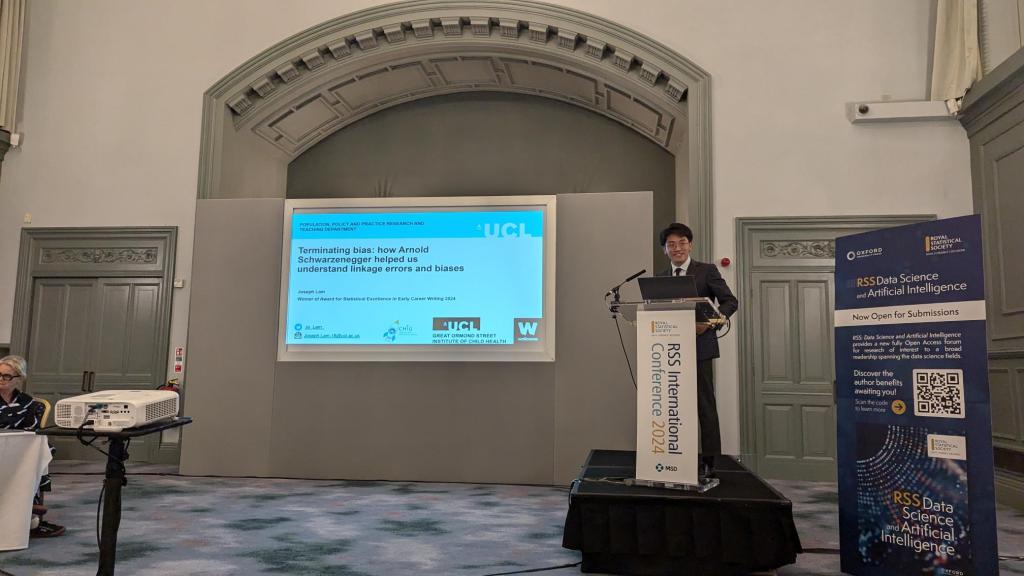
Presenting at RSS, article will be out in November 2024 Edition of Significance!

My first ever RSS conference and I wish I had learned about it sooner! The conference is a great mix of statistical theory, methods and applied research, and an international representation with >700 attendees from academia, media, and people from government statistics. A flurry of exceptional talks and keynotes started with Tim Harford, reaffirming that it is key to reject the notion that “Stats can tell you anything” because it becomes synonymous to “Stats can tell you nothing” – undermining the confidence of the public (and sometimes our own!) towards statistics. Pivotal to my theoretical thinking & development is Erica Thompson’s talk and book “Escape from Model Land”, encapsulating the need for modellers to make use of their expert knowledge in their interpretation of statistical models, and take accountability, instead of pretending there is strong objectivity in research. My talk as the winner of the RSS Early Career Writing Competition was well received, with several follow-up chats and emails. It’s another imposter syndrome moment – who am I to give a talk to these brilliant and renowned statisticians!? People I met at the conference were kind and open to conversations, and I felt very welcomed from start to finish. Statisticians are a special group of people!

IHME – Seattle, University of Washington

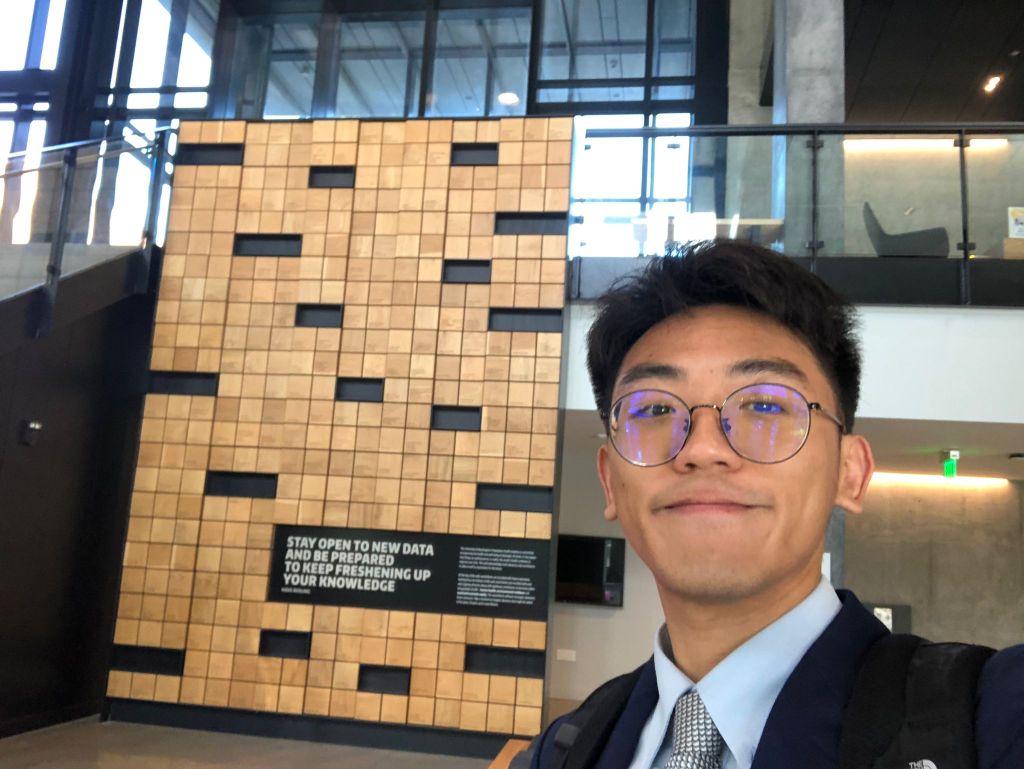
“Stay open to new data and be prepared to keep freshening up your knowledge”
Hans Rosling, IHME

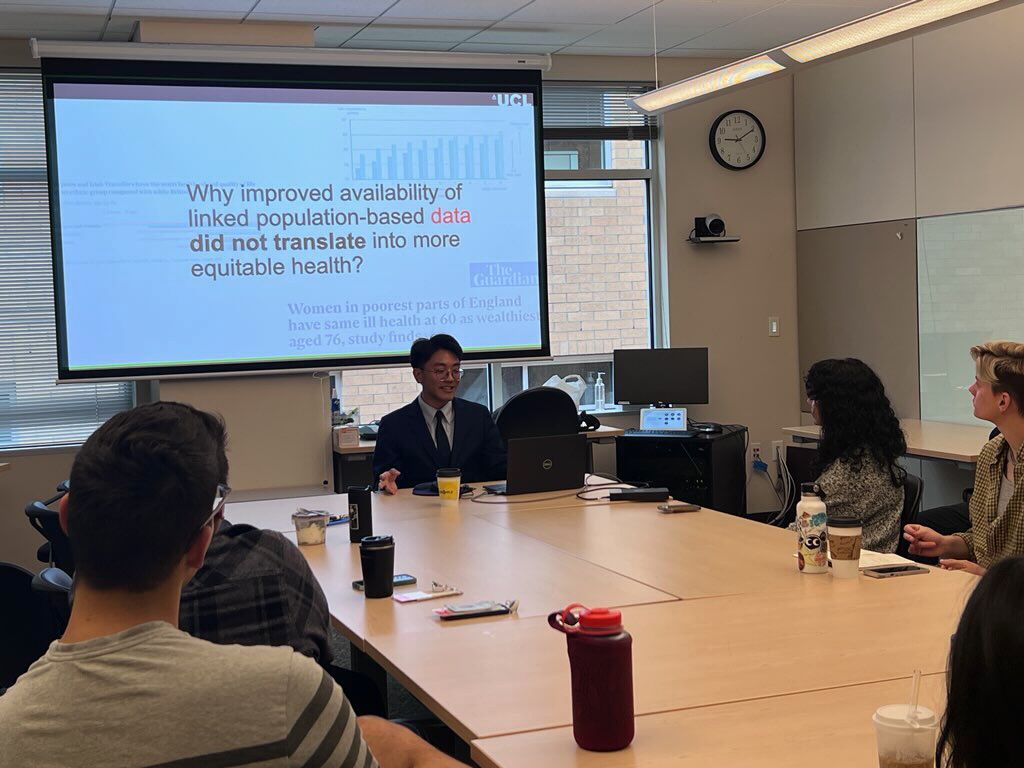
First few steps into the building and was greeted with Hans Rosling’s quote “Stay open to new data and be prepared to keep freshening up your knowledge.” Another humbling experience giving a 1-hour seminar, titled: The Road to Racial Health Equity Starts with Data Equity, Transparency and Clarity, with a strong 80+ audience online, and 10 in the room. Again I fell into my typical long-winded mode and couldn’t finish all of my slides, but it is re-assuring knowing that what I have been working on in the last 2 years can be meaningful and impactful to how researchers approaches racial and ethnic health inequalities. The dynamics at IHME is always upbeat with biweekly goal settings and meetings. As a PhD student, my research is sometimes a bit isolated from the rest of the group. It is quite nice to re-immerse in a team-based research process for a bit! I was ecstatic to visit the paediatric residents on the Health Equity Track at Seattle Children Hospital, had great conversations about quantitative and qualitative approaches to improving health equity. Also inspired my initiative to share our stories!

Conversation with Paediatrics Residents on the Health Equity Track, Seattle Children Hospital

IPDLN 2024, Chicago

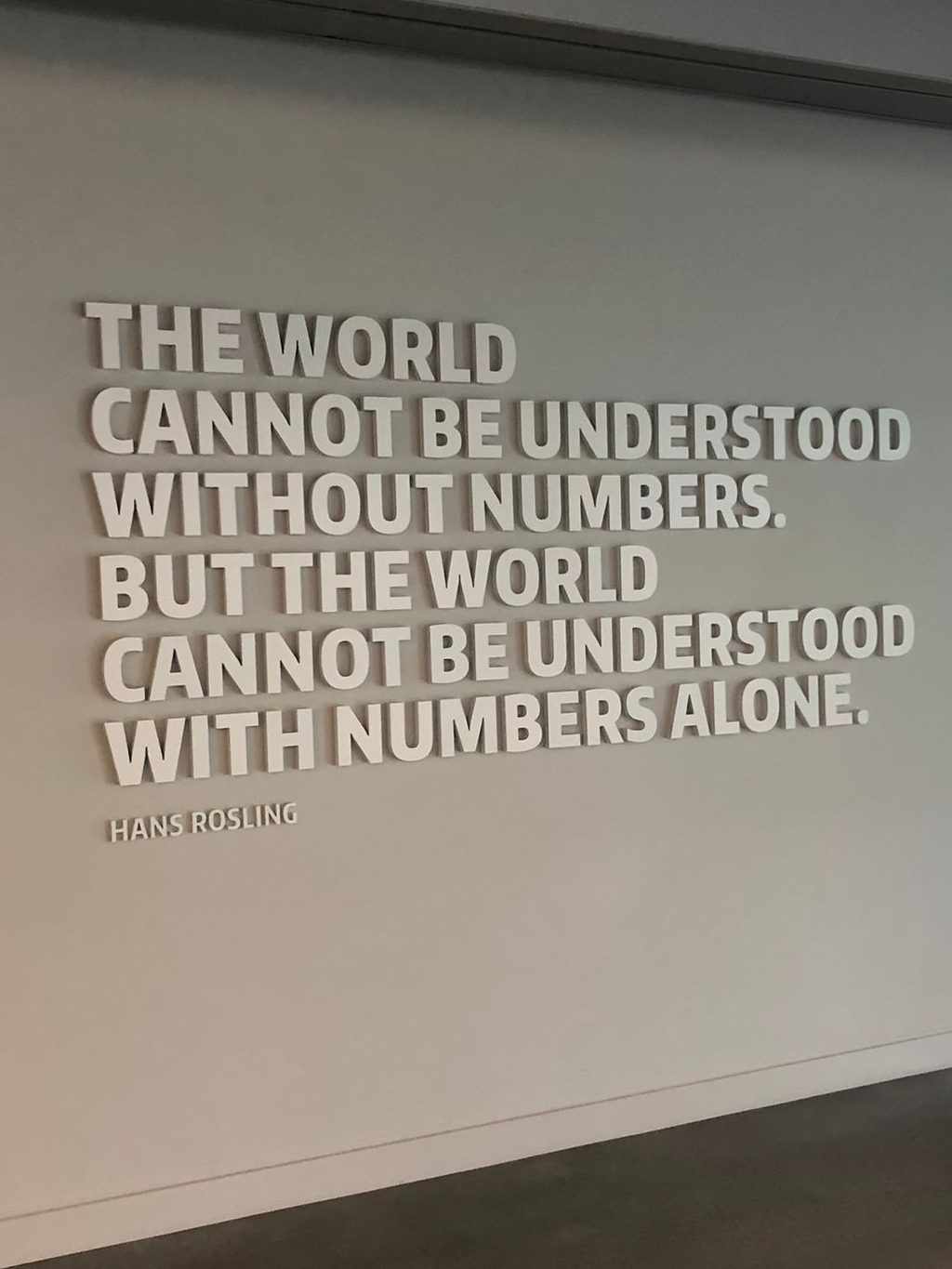
Chicago – it’s been over a decade since I last visited and it is ever-stunning. IPDLN Edinburgh was my first conference as part of my PhD, I was 3 months in, and was properly amazed by the breadth and depth of topics discussed then. I hoped I could one day have an opinion, have something valuable to add to this community – and I did! With new friends I met at IHME, I was invited to help out at a pre-conference workshop, presented a poster with international collaborators (and meeting some for the first time in person!), and gave 2 different presentations. I am so glad to have met people across UK, US, AUS, NZ and beyond, working in inter-related areas on record linkage. Incredible workshop on data visualisation by Rowena from Wales, and again featuring Hans Rosling on his BBC visualisation on life expectancy! His legacy is felt deeply in this trip, and every time we hear from colleagues working with Swedish data! I look forward to keep being a part of this evolving community!

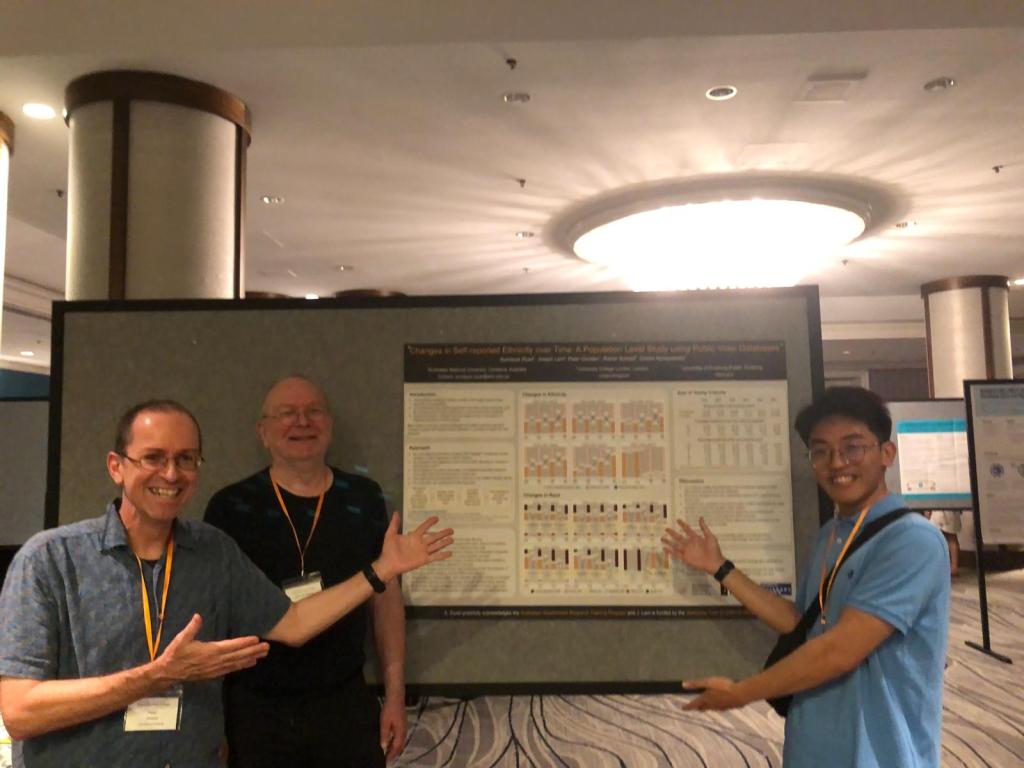
L to R: Peter Christen, Rainer Schnell, Joseph Lam;
Presenting work led by Sumayya Ziyad who cannot make it to Chicago this time.

Having Fun

I have yet to talk about the entertainment and cultural exchange bit 🙂 Seattle and Chicago has treated me well, from Space Needle to the Bean, from underground walk to architectural boat trip, from jazz club to blues bar, from Burke Museum to Second City, from Seahawks to the Cubs! This will be undoubtedly a fond memory when I finish my PhD – final stretch, now back to work!

That’s Just Common Sense… Or is it?

Esther McVey, A.K.A Rushi Sunak’s “Common Sense” Minister, declared “war against backdoor politicisation” by suggesting a ban of “divisive” rainbow coloured lanyards among civil servants (which caught most of media attention), and a ban on all jobs dedicated to equality, diversity and inclusion (EDI). This probed my curiosity in what “common sense” really meant.

Here’s a quick summary from reading the Wikipedia page (perhaps GPTs would do a better job here but let’s keep this authentic!). Earlier (~BCE 350ish) Aristotelian definition of “Common Sense” focused on the five senses, how there must be a common way in which people (and creatures) perceive the world, tell apart constructs across modalities, for example “sweetness” from “white”. This understanding of “Common Sense” was mostly translated and updated after Enlightenment, in the late 18th Century, to mean a set of collective and conventional moral consciousness, sense or sentiment that doesn’t need reasoning (with Kant standing against the feeling bits). This philosophical line of representing “Common Sense” as an “universal moral law” has been adopted in Catholic and Christian apologetics, such as CS Lewis’ influential book “Mere Christianity”. Across the Pacific Ocean, ancient (~BCE 300ish) philosopher Mencius wrote (English translation) about a similar concept, that humanness is defined by their innate feelings of commiseration, shame, modesty and complaisance. These philosophies shaped our modern understanding of “Common Sense”: (1) very optimistic view of the human condition, (2) universality of this moral judgement that does not require reasoning or reflection, and (3) “Common Sense” is used to define humanness.

Here are a few quick arguments to the “Commonness” in “Common Sense”. *Assessment of the human condition is not relevant to this discussion so I will just say I do not hold the same optimistic view of human nature as Mencius. A low hanging counterargument to (2) is the shift of what’s deemed to be morally acceptable over time, context, society structure and locations. Killing animals for fun was “universally” accepted, until it’s not. Slavery was “universally” accepted, until it’s not. Given (3) is true, with (2) being relative to space and time, accordingly, what defines humanness (3) becomes relative. The key question, hence lies at who decides what is Commonly Good, and when it is no longer Commonly Good.

Rainbows are divisive?

How did Esther McVey know rainbow coloured lanyards are “divisive” and are against “Common Sense”? By definition, there is no need of reasoning for Esther to explain her decision. On a personal level, I acknowledge (accept, but maybe not at endorse level) other modes of “knowing” that does not strictly rely on reasoning. For example, faiths, beliefs, trust, relationships, values can not always be meaningfully explained or metricised and quantified into degrees of reasoning. People are rightfully living by their beliefs, without the need of justifying how they have conceived their beliefs, with or without reasoning. I mean, I still can’t fully understand why people voted for Trump, but I am satisfied to not demand their votes to be reasoned before them be deemed valid, and I can co-exist with them in a democratic society. However, in the public sphere, this way of knowing without reasoning removes the transparency and justifiability of decision-making. Relying solely on this way of knowing re-mystifies politics back to the era of empire-theocracy. The politicians (decision-makers) are left with the opportunity to misuse their power of exceptionality. Reason is required for this reason. Fortunately, in a democratic system, there are still mechanisms to challenge this power – We’ll see when it happens (when’s general election?).

There are several foreseeable practical impact on public servants following Esther McVey’s announcement. This instrumentalised view of civil servants as a horde of machines with assumed neutrality might be preparing for large-scale AI takeover. Jokes aside, this un-reasoned power to put restrictions on people – humans – to express themselves will soon be shooting the already weak civil services in their own foot. There are two kinds of expressions that are being restricted – visible and invisible sense of identities (Back to Aristotelian!). Visible ones are like the example, carrying rainbow lanyards, but could be extended to, say, wearing a hijab, looking too Asian, does not drink, revealing ankles etc… When the expression of personal identity conflicts with what’s deemed to be “divisive” or “Common Sense”, it will always be the individuals’ humanness that are disrespected. Heck, “Esther” too is a name originated in Jewish/Christian traditions, should we move to use numbers to call civil servants during their duty hours (hello again, 1984)? Esther McVey’s attempt to promote inclusion in civil servant workforce serves as a recipe to undermine the exact thing she is trying to improve.

There are wider implications on identities that are invisible. Networks to support people from different religion or country of origin are now suppressed. Role models, peer support that were previously more accessible are now hidden. There is no easy way to identify other people who are similarly minded, who are happy to support, for mentorship, informal chats or discussions. This assumed “neutrality” then, again perpetuates a biased resource allocation system towards people with high capabilities (in terms of social capital etc….), and not potential. The already clunky “machine” Esther hoped to fix will keep on failing her expectations.

Would universities and higher education institutes follow suit? UKRI has made precedent in October 2023 by banning Research England EDI Expert Advisory Group (with independent investigation found no evidence of any breach). Will these bans extend to university staff who are technically publicly funded? I had a rainbow lanyard when I was at King’s College London, would they take those away too?

End with a whip of good news – in the latest news today, the lanyard ban does not appear in the actual guidelines. But it was never just about the rainbow lanyards. More is coming, and next time it might concern you, when your sense of individual and humanness is no longer respected, remember, it’s just “Common Sense”.

Temptation of Treating Science as Sovereignty

Science as Sovereignty, and the problem of this.

As Nietzsche shared his observation that “God is dead”, as we enter the (post)secular world, we seemingly departed from the need of revelation from supreme beings to ascertain the truth. However, Schmitt believed that political sovereignty remains (re)enchanted within the same theological framework, that modern national sovereignty is a reflection, or a derivative of Theo-sovereignty. In Chan’s book, he attempts to disenchant the Theo-political relationships in this atheistic age.

I cannot help but project the arguments & discussions in the book to my line of work: in health research and policy making, that Science is disguised to fill the gap of Theo-Sovereignty.

“Follow the science” – Not sure if anyone kept a count of how many times Boris Johnson and his crew repeated this phrase during the pandemic. They certainly walk their talk in at least 2 dimensions: party gate, and in policy making – slow & weak masking recommendations. Nevertheless, “follow the science” stirred up a lot of emotions and debates within the country – arm-chair epidemiologists, experts with polar opposite recommendations, fake news… Amongst the fury of opinions, the government framed science as the rightful king, filling the gap of Theo-sovereignty, as a voice of a justified and absolute authority.

A character of sovereignty is that it is above the law, that the sovereignty shapes the law, and the law serves the sovereignty. Social distancing, no home visits, masking… In this way “science” very well fits this description, determining “What” a society should do. Anything that strays away from “Science” deserves mockery and rejection, if not punishment and persecution.

All sounds good, only if science is as straight forward as a binary yes or no. In my view, science is an art of embracing and interrogating certainty. “It depends.” Science by nature cannot act as a sovereign power to rule a society. Hence what we observed in the UK (and many other places), is instead a colluded form of scientific sovereignty, a nationalism-biased evidence-picked aristocracy. This camouflage of nationalism in science is most evident in global (health) research. In the following paragraph, I wish to demonstrate how current approaches in defining “Who” should do research is colluded with nationalism (national sovereignty).

There is an increasingly popular narrative in academia that global research should be led by people from their corresponding country. Not to be mistaken, I am fully supportive of the said initiatives, providing funding and opportunities for scholarship to develop in the global south. I’ve gone out of my way to support researchers from overseas to learn research methods, statistical software, and job interview preparations.

However, this narrative is often reduced into a means of reattribution or reimbursement of the western colonial past. This emphasises on appearance and country of origin takes away from the researchers’ abilities, but more importantly, feeds into the increasingly prominent nationalist agenda: “it is their history, let them research it”, “it is their people, let them help them”, in short, “it is  none of our business.” By no surprise, as the UK economy showed signs of slowing, the overseas aid (which is used to support a lot of global research) was immediately cut. This new “scientific” post-Theo-sovereignty is not gentle nor kind, but self-preserving, self-promoting and self-indulging.

Science does not happen in a vacuum. But it if does, we would easily reach the conclusion that researchers from the local countries are more likely to understand the context better, which makes research, communication, implementation and much more easier. The preferential development of scholars from the global south to solve local problems makes sense. These initiatives need not to be framed as promoting diversity, which could be twisted into a form of exclusivity, but simply as a better approach to produce better science.

Why hasn’t in the past global south scholarship taken a larger role in academic research and policy making? Why hasn’t they be considered suitable candidates? Our measurement of capability is always framed by a limited few. Did you graduate from Oxbridge? Did your parents work in academia? Did you publish from x y z journals? It is the university application season soon, have a look at the plethora of university league tables floundering themselves to their potential (mainly overseas) customers, aren’t we all playing by this game a greater authority designed, as they saw that this was good?

We are enchanted by the belief of certainty “Science” provides. This is no fault of the scientific approaches, but the collusion of other worldly powers (e.g., nationalism) that biases how progress is achieved and measured. 

This is usually the place I offer a solution, some insight or revelation. But I really don’t have one. As a Christian, I believe in God’s provisions big and small. Researcher is a role equally as impactful to improving people’s lives as any. If God forbids, I shall do as much as I can as a researcher. My life and mission is bigger than this role. And I hope you find yours too.

This blog collects my early reflection from reading Dr Chan Ka Fu’s new book on political theology. I’m still very early on in this book, so I might have misrepresented Dr Chan, if so I apologise!

Open (Data) Science – Data Management is Key

Till the end of the day, it is rare for any finding to be considered completely irrefutable or beyond scrutiny.

Psychology degrees do give you superpowers. No, you can’t read minds, but you can shut your eyes and perform t-tests on SPSS. There is a point in time where I can rely on muscle memory alone to get the p-values popping up my screen. I can see how for simple analysis point and click solutions can be much preferable.

It wasn’t until my final year project that I started to really recognise the importance of transparent and replicable codes and research processes. I had to co-collect data along with my peers, we each collect half of the data. The data collection process is by no means easy: a collage of cognitive tests, long structured interviews etc. keeping the participants (mainly other undergraduate students) engaged and put effort was always a challenge.

All is well until I discovered my data collection partner was popping in random numbers in the dataset. “What is she doing?!” Shocked I was seeing this, but even more shocked when it turned out that she forgot to record age and gender in the interviews. Not having gender is less relevant, but age is a key variable we have to take into account for the distribution of IQ differs by age. I was quite disappointed as this meant that the data was compromised, and I couldn’t bring myself to really trust what the data could tell me – if basic demographics are made up, how credible can other information be?

I was annoyed, just like this cat.
Photo by Anna Shvets on Pexels.com

I think of this experience often as I read research papers that does not describe their data collection and analysis plan very well. In academia, more people are willing to share the codes they used for analysis. I believe the next step is to extend the transparency to data cleaning and management processes. When describing the process of data curation, it is easy to focus on describing the psychometric properties of the questions. However, I believe there are a lot of wisdom research groups can benefit from sharing their responses to more general questions like: How is the database managed? Were there any challenges to data management, how were they resolved? Studies and initaitives like PROSPER (PROfeSsionnal develoPmEnt for Research methodologists), helps consult and formulate future developments plans for research methodologists. I am happy to see how things are developing, and for methodologists to finally gain the limelight a bit more in research!

Till the end of the day, it is rare for any finding to be considered completely irrefutable or beyond scrutiny. The best we can do as researcher, in my opinion, is for future researchers to acknowledge as they read our findings, and say: “They were bound by the knowledge of their time, that was the most rigorous way they could have done it!”.

A key development goal from my PhD is the ability to develop codes and wrangling with data across Stata, R and Python. I am still learning the way to work across platforms that would make the most sense! Do share with me if you have any tips 🙂

Chapter 2: Current approach to ethnic representation

Construing means as outcome may overestimate true progression to a more equitable HEI.

21st century is an era of metrics. Measuring and demonstrating impact becomes essential to research publications. This realist “only measurable changes are true changes” perspective dominates how “evidence” is conceived. The same line of logic was applied to promoting EDI initiatives.

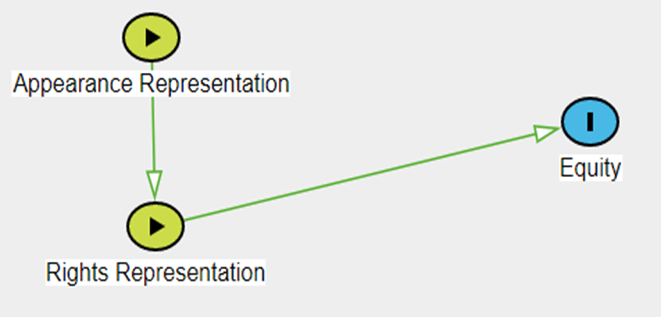
We often treat EDI representation as visible representation, as they are more measurable. The aim is to get people of certain membership of a group (e.g., Asian) to attain an ideal proportion in a certain measurement of equity (e.g., promotion). For example, proportion of non-white people on interview panels, international student percentages etc. However, in pushing for a wider visible representation (definition 1) to be achieved, we assumed people who share those characteristics (1) are necessary to represent the groups’ rights (definition 2).

Assumption that AR leads to RR, which in turn leads to Equity
AR is not necessary nor sufficient to attain Equity

For example, in the Sewell report, the ethnic diversity of the police force becomes a target of intervention, with the underlying theory of change that once the (appearance) representation problem is solved, minoritized communities would regain equitable rights compared to their white counterparts. Another example, EDI groups in HEI often require a certain demographic make-up, inadvertently putting pressure on minorities to contribute. This follows the same line of logic that once the EDI group is diverse, the diverse needs will be addressed. There are numerous counterexamples that visible representation do not automatically achieve rights representation, black on black violence, the countless stories about those who made it became the gate-keeper to enter “high society”, hey ho, look at the faces behind UK Illegal Migration Bill 2023.

No doubt, having representation from minoritized groups can be a reflection of underlying change in power structure, equality and resource allocation. But that cannot be the only means of measuring change in our society. As Universities are incentivised to push for different awards recognising their efforts on EDI, when the only outcome measure focuses on superficial appearance representation, we might overestimate our progress to equity.

We need people who can fight for the rights of the underprivileged, and empower the minoritized, such that appearance representation would be the natural outcome of a changed landscape. This is a strong argument for people in power, often White and British, to take initiative. The misplaced emphasis on “measurable” outcomes became a hinderance to progress, as we phantasies for an easily measurable solution. Our current approach to ethnic representation does not promote this vision.

This conflict in apparent progress and on-the-ground experience among ethnic minoritized members of HEI is a source of frustration. I shall touch on this in more detail in Chapter 4.

In the next chapter, I will describe 2 flaws in how ethnicity and ethnic representation is discussed, and hoping to elucidate the power constructs that were so deeply embedded in our social interactions that may slow, or mimic progress in promoting ethnic equality.

* Appearance Representation: A depiction or portrayal of a person or thing, typically one produced in an artistic medium – definition 1.

Rights Representation: The action of standing for, or in the place of, a person, group, or thing, and related senses – definition 2.

Blog Series: Chapter 1: Define Representation and Why It Matters

This is the first part of my reflection serving as a member of the Equality, Diversity and Inclusion (EDI) team at the University. The series is titled: On Ethnic Representation and Equity: The Costs of Conflating Means as Goals.

This is the first part of my reflection serving as a member of the Equality, Diversity and Inclusion (EDI) team at the University. The series is titled: On Ethnic Representation and Equity: The Costs of Conflating Means as Goals.

Introduction

The UUK & NUS report in 2019 reported that less than 2% of 19,000 professors in the UK higher education institutes (HEI) are non-white women. Improving the representativeness of UK HEI staff and students became a priority for Equality, Diversity, and Inclusion initiatives. Proposed solutions included racial equity hiring practices, such as having a more diverse interview board, and purposeful advertisement within the targeted populations. Whilst I appreciate the equity-based approach to improve ethnic representation, I worry that the current framing of “representation” would divert attention away from cultivating a culture that embraces unity in diversity. Despite continual effort, mainly by people from racialised communities, ethnic minorities continue to feel tokenised and marginalised in academia. In this article, I would re-assess the logic behind the current EDI approaches to define and improve representation, point out the intrinsic flaws of the current definition of representation, and propose potential barriers for UK HEI to re-calibrate the direction for improving representation. I argue that the philosophical positioning behind current approaches to promoting EDI conflates means as goals, and might limit our ability to evaluate whether we have truly promoted equity within HEI.

Chapter 1: Define Representation and Why It Matters

“Representation” is typically defined in the following 2 ways (Oxford English Dictionary):

  1. A depiction or portrayal of a person or thing, typically one produced in an artistic medium.
  2. The action of standing for, or in the place of, a person, group, or thing, and related senses.

I will refer to definition (1) as “Appearance Representation” (or Visible Representation), and definition (2) as “Rights Representation”. In my opinion, the need to represent arise as a product of “differences”. For example, “appearance representation” showcases something spectacular, it captures something that is different from the norm; “rights representation” serves the purpose of settling different opinions within or between individuals and communities e.g., legal representatives, political party representation.

Who is HEI trying to represent? What does a well-represented HEI look like? I believe this is determined by 2 main factors: the size of targeted community and school philosophy.

Depending on the size of the institute, the targeted community to be represented should be reflective of the local community (regional, e.g., Lambeth, London), the city the institute is based at (e.g., London), nation or country (e.g., England), or even the world. There is little point for a local primary school of 100 pupils in Kent to be representative of world population, which would mean >90% of White British pupils in Kent would have to compete for <10% of the places, essentially excluding most from education. Similarly, the proclaimed world-class international universities should recruit staff and students that is reflective of their targeted community, or at least their renowned global reputation. This view mirrors that of the suggestion made in the Sewell Report (aka the Commission on Race and Ethnic Disparities), e.g., “to make police forces more representative of local communities”.

School philosophy refers to the beliefs the HEI have regarding the (distribution of) characteristics in an ideal world. School philosophy may take precedent of the size of target population. Take women in academia as an example, it is not as simple as wanting an overall proportion of men and women in HEI that is reflective of the community. It is believed that women are disproportionately lost from academia, and that this has stifled academia from reaching its full potential (premise of Athena Swan). Acknowledging the hegemonic masculinity that persists in society (and academia), extra effort is required to promote and protect the rights and platform for women to develop their academic career. This approach to think about representation considers the social structures of the present and help us avoid reconstructing the inequalities that is presently observed in the community.

In essence, in a well-represented HEI, all groups should be represented, in terms of “Appearance” (in terms of number/proportion) and “Rights” (in terms of platforms/priorities), that is in-line with the institute’s philosophy, and proportionate to the size of the targeted community they are serving.

To be continued…

Are theories over-rated?

A short reflection based on my observations on trends in mental health research. With audio narration.

Listen to the blog here.

Research methodology 101 in psychology typically starts by explaining statistical hypothesis testing, how data can be understood in a certain way (model) to draw inference. A theory-based statistical model is the approach in which researchers make meaning out of the constellation of data-points – in a systemic and falsifiable way that differentiates inferences from astrology.

Research is not easy. There are many decisions and assumptions researchers make in the process, e.g., how are concepts defined, how are these concepts measured, what are the relationship between these variables, do they overlap? Researchers design, clean, collect and frame data in a way such that they can tell a story – Data may speak for itself, but the theatre is built by the researchers. It is more than choosing which variables to put into the model, or discover which variables are statistically associated with the predictors. It is about how the confirmation or rejection of the statistical model should be interpreted, in what context, for which populations – and more.

Psychology research methods 101 – Hypothesis
Photo by Tara Winstead on Pexels.com

The industrial revolution automated jobs and led to an expansion of productivity; the “artificial intelligence (AI) revolution” appears to share similar aims. The first questions that pop to people’s minds are – “Can we automate this process? If so, how?” The same ideology has been applied to understanding data – there are AI models spring up like mushrooms after rain, with approaches like “covariate auto-selection” that promises to perform as good as (or outperforms) “traditional analysis” – whatever that means.

I am no fan of such practices. This is because I think data analysis is only a small part of the whole scientific process, there are limited ways you can “let the data speak” if the paradigm of data collection, conceptualisation etc. is never challenged. This AI-do-all approach, if deemed to be the best, or even worse, the default practice, will leave little room for users to challenge the premises and assumptions in which the inference are drawn, hence no true empirical theoretical advancements, but post-hoc theory-making. But can you really blame AI data scientist for this?

There is no point in finger-pointing [maybe 1 >:o)]. The problem of weak theory is prevalent in (mental) health research (More discussion here on formal theory: https://eiko-fried.com/on-theory/ – Eiko’s blogs, with a lot of resource on theory, do check them out!). An example that is highly relevant to my work is the use of ethnicity in health research – is it biology? Is it country of origin? Is it migration status? Is it social support and network? What is it’s relation with the covariates? Papers often describe whether their findings fit with previous research, but most of the time stopped at that level, “More research is needed”, and less discussion on theory. It is this tendency of focusing just on inference and less about theory that precipitates AI-based analytical practice to expand.

AI helps make meaning from a pre-specified framework
Photo by Tara Winstead on Pexels.com

This phenomenon begs the question, why is theory playing less of a role in mental health research? What is the driver behind this change in scientific practice? I believe a particular emotion – frustration – plays a role. I see this frustration arise from the huge implementation gap, and the insurmountable unmet needs, which is made worse by the replication crisis.

We are said to be in a mental health crisis. The healthcare system is more sensitive to detect mental health problems: they are recognised earlier and more broadly at primary care, but our ability to treat our patients did not improve to the same extent. It takes 17 years to translate health research into practice. IAPT, new waves of psychotherapy, medications… These attempts to improve service provision (by quantity/access) and quality did not match the increasing demands. With record level of demand for mental health support (even before Covid19), the whole community is pressured to provide solutions. The frustration stems from the compassion to the plight of patients.

The same frustration is felt by the funders too: decades of funding to find a pill to eradicate dementia, pilling resource to prioritise “what works”, stronger than ever appetite for interventions. The positioning of researchers in the field is no longer “neutral observer of (natural) phenomenon”, but “proactive driver of change”. The increasing need to demonstrate “impact” is evident of this change of positioning. Measure of impact depends on ability to demonstrate progress. Theory development is often a twisted journey, it intrinsically fares worse than randomised control trials in that regard in the current paradigm.

In conjunction with the replication crisis, where small sample size and poor methods (but not weak theory) were deemed to be the culprit, strength in numbers feels like a pre-requisite to publish in high-impact journals. This shapes the ecosystem of academia. Bigger institutes are in better position to run larger studies, hence sustenance of the self-prophesised loop of impact as the top research institute. There are less options for smaller institutes to compete – to rely on impact-driven evidence making, rather than theory testing or development. Research became more focused on interventions and local adaptations, rather than trying to come up with a grand theory for a disorder.

Photo by Steve Johnson on Pexels.com

Researchers do not have to choose binarily between “theory” and “intervention”, there are plenty of middle-ground between the two. In fact, they go hand in hand to the development of any field. An “intervention”-leaning environment amplifies the need for researchers to understand and clarify “context” – how accumulated evidence can be applied to the situation at hand. I don’t think we are very well trained in this regard (yet), it hasn’t been the focus in the past, nor included in the curriculum. Approaches such as realist evaluation, rapid qualitative reviews etc. arise to address this gap. A “theory”-leaning environment, on the other hand, emphasis on understanding the nature of a phenomenon. For example, the biopsychosocial framework encourages multidisciplinary treatment, which hopefully the restructured integrated care systems are in better position to provide. Another example, where digital based mental health intervention apps taking many different approaches failed to live up to their expectations, perhaps rekindling the positioning and theory of such interventions is the bridge to success. Theory serve as a foundation for knowledge to be generated, decisions justified, and help the field explore alternative explanation of “reality”.

What’s next? It is for us, members of the scientific community to live out the direction of our field. We need to be pragmatic to come up with solutions to address the huge mental health needs, but we need to continue to be observant, patient, and preserve space for new theories and alternative framework of understanding of mental health to be developed and tested.